Where pigeon nets are installed
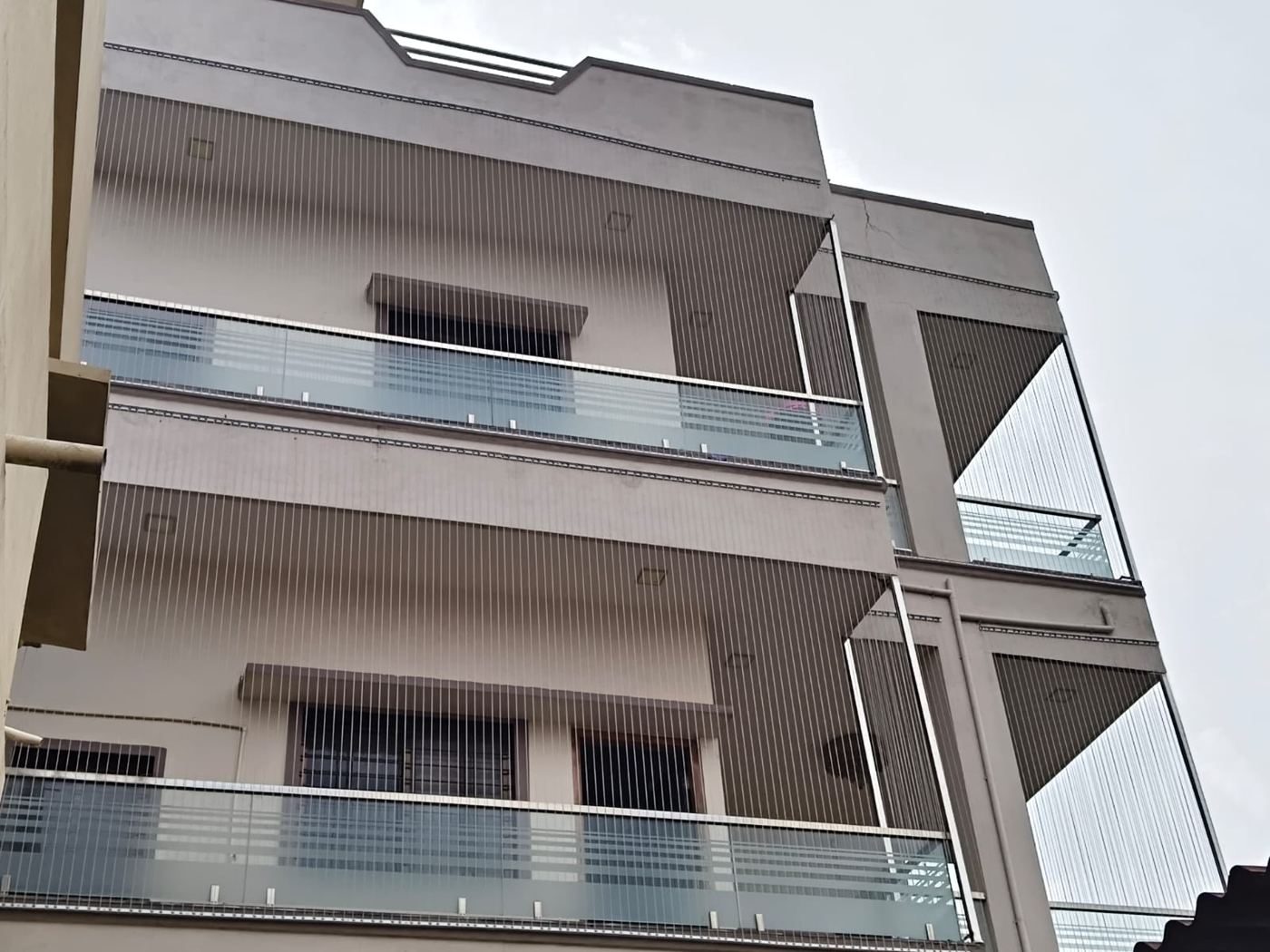
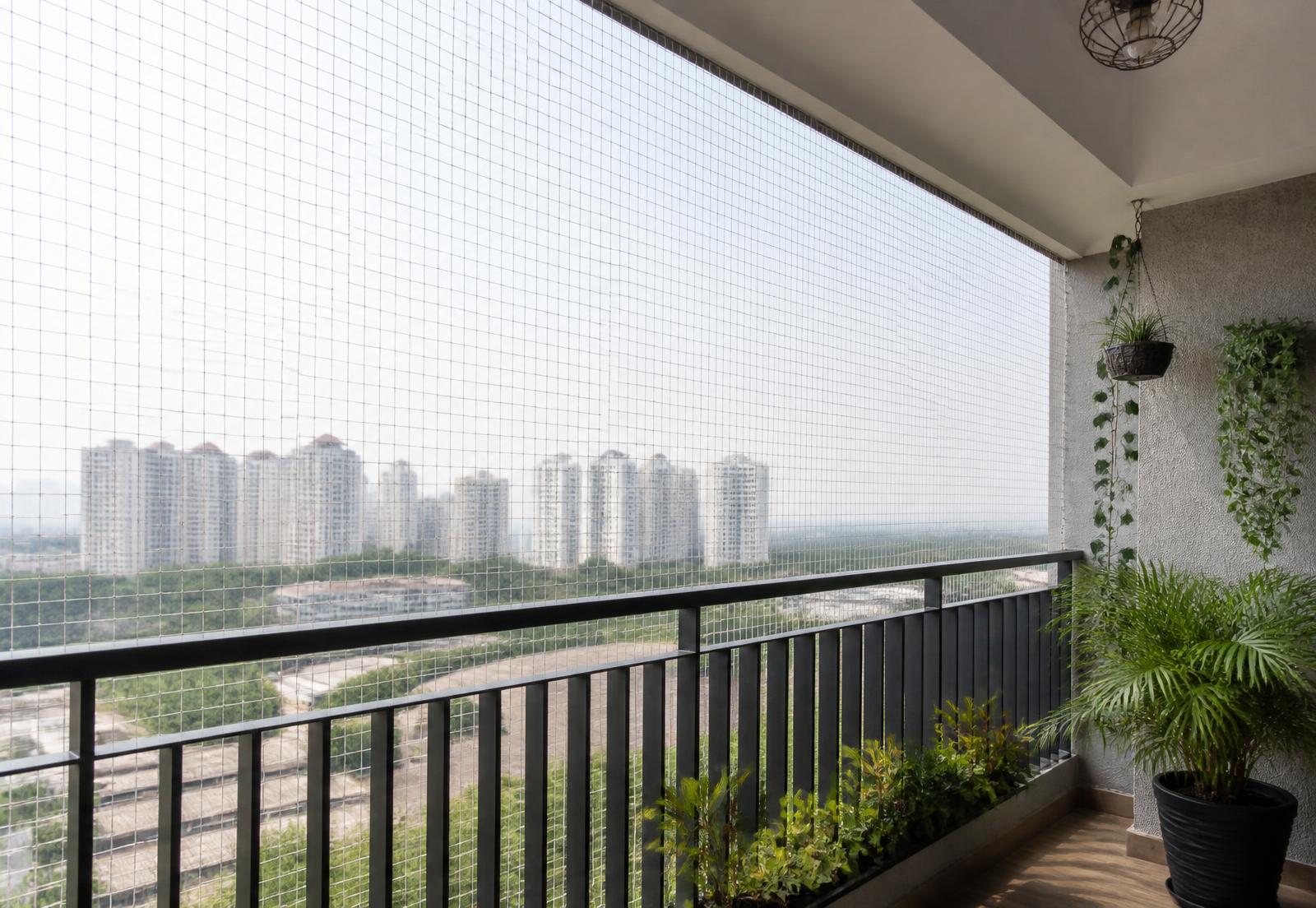
Most of our residential work in Maharashtra is on flat balconies, kitchen and utility windows, and the gaps around air-conditioner outdoor units. These are the places pigeons find first because they are sheltered, out of the wind and rarely disturbed.
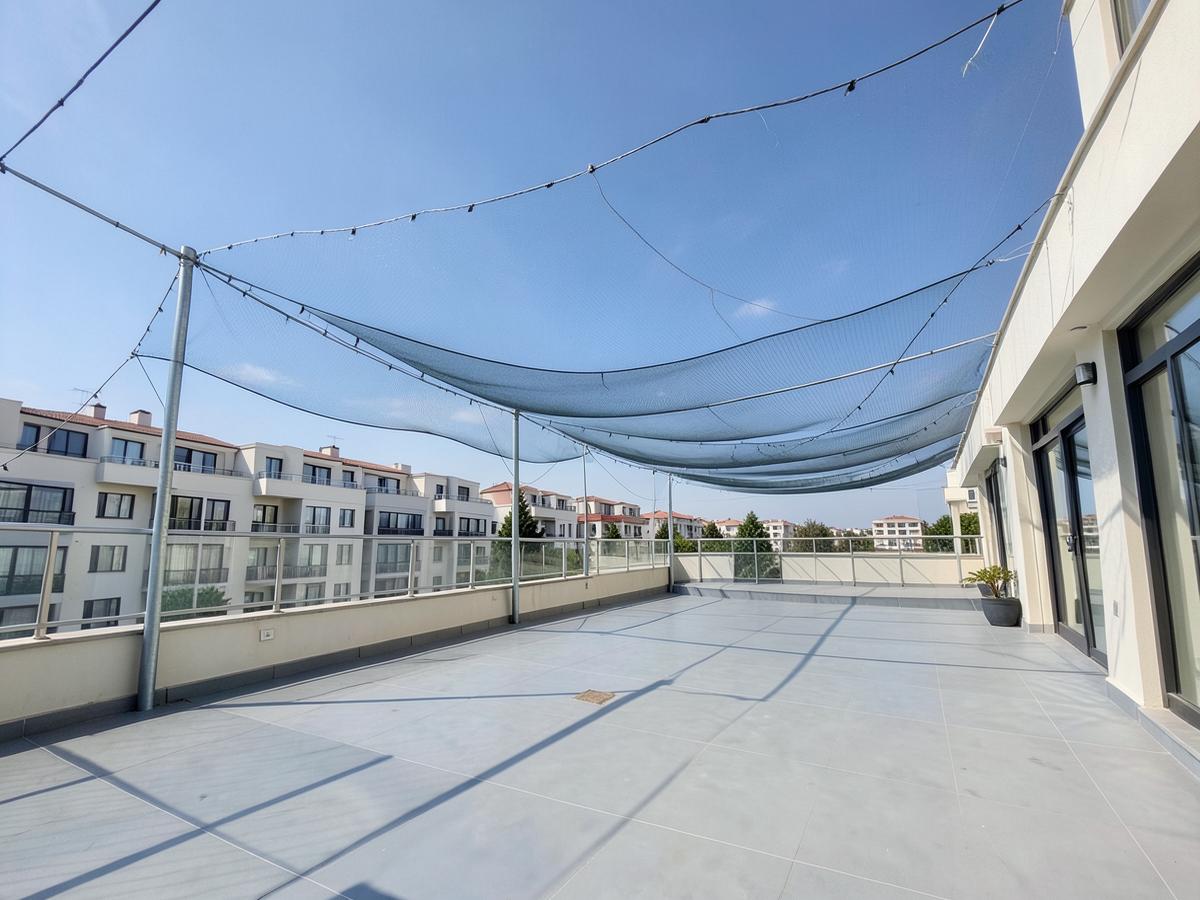
The same method scales up to duct shafts, stilt parking, lift machine rooms and society common areas, where the span is larger and the fixing has to account for a rougher surface.
How the installation is done
- The opening is measured and the fixing points marked at even intervals around the perimeter.
- Anchors are drilled into the slab, beam or wall — never into a surface that would weaken under load.
- A stainless steel wire is run through the anchors and tensioned so the net has a firm frame to sit against.
- The net is cut to size with an allowance and laced to the wire at close intervals so no gaps open up at the edges.
- Corners, the bottom edge and any service cut-out are finished separately, because these are where poorly fitted nets fail.
Choosing the material and mesh
For balconies we generally use a UV-stabilised nylon net at roughly 3/4 inch (about 20 mm) mesh. That is fine enough to exclude pigeons while staying light and visually discreet.
Colour is a practical choice more than a cosmetic one: transparent and off-white nets disappear against a light facade, while black nets are the least visible when you are looking out from inside.
For exposed terraces and industrial spans we move to a heavier HDPE net, since sun and wind load are the two things that shorten a net's life.
What affects the price
- Total area to be covered, quoted per square foot.
- Net material, mesh size and thickness.
- Height, and whether external access equipment is needed.
- Fixing method the structure allows — drilled anchors, clamps or a free-standing frame.
- Any additional finishing such as a zipped access opening for cleaning.